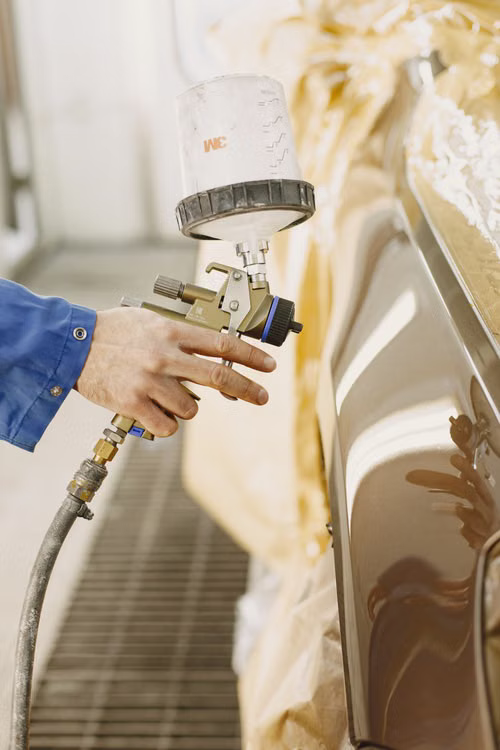
Most drivers never think about the room where their car gets painted. You drop the vehicle off, you get a call a few days later, and you pick it up looking new again. But the temperature inside that booth quietly shapes your auto body repair bill more than almost anything else on the estimate. A few degrees off, and the paint behaves differently. The shop either pays for that mistake, or you do, sometimes years later when the finish starts lifting.
Why Paint Booth Temperature Controls Auto Body Repair Costs
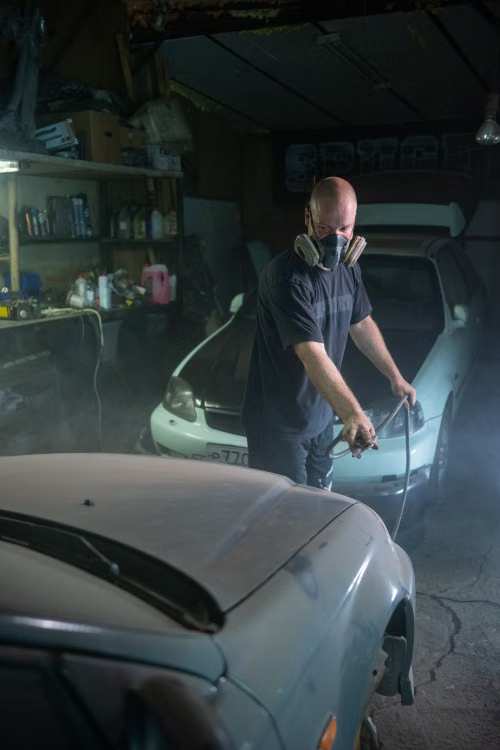
Automotive paint is a chemical reaction, not a coat of color sitting on metal. In auto body repair, basecoat and clearcoat need heat to cure properly. Too cold and the solvents stay trapped underneath. Too hot, and the surface skins over before the layers below have finished. Both failures look fine on day one. That is the part that catches people out.
Most refinish manufacturers specify a bake cycle somewhere around 60 degrees Celsius, held for a set number of minutes, with the temperature measured at the panel rather than in the air. Getting that right takes a sealed booth, filtered airflow, and a burner that holds a steady figure. None of that equipment is cheap to run.
Here is why that matters to you. A shop with a properly heated downdraft booth is burning gas every time a car goes in. A shop cutting corners is letting panels air-dry in a corner of the workshop and pocketing the difference.
How Booth Time Appears on Your Auto Body Repair Estimate
Your estimate has a line for refinish labor. It is measured in hours, and those hours assume a controlled environment.
What sits inside that number:
- Surface prep, sanding and masking
- Primer application and its own cure cycle
- Basecoat, then flash time between coats.
- Clearcoat, then the full bake
- Cooling before the panel can be handled or reassembled
Flash time is the gap between coats. Rush it, and you trap solvent. Extend it too far and adhesion between layers drops off.
You cannot compress this. A panel that requires 40 minutes of bake time takes 40 minutes, and the booth is occupied for the entire time. That is why refinish hours rarely move much even when the damage looks small.
See also: Green Crypto and Sustainability
Sacramento Heat and Humidity Change the Numbers
Summer here does strange things to paint work. Ambient temperature climbs, and a booth already running warm has to work against that. Shops adjust the reducer they mix into the paint, switching to a slower formula so the material does not set before it levels out.
Winter flips it. Cold mornings mean longer warm-up cycles and higher gas use.
This detail should stay in the workshop. It does not, though. Ask a painter about a July afternoon repair, and you will hear about mixing ratios changing twice in one day. Those adjustments cost material and time, and both land somewhere on the invoice.
What Happens When the Temperature Is Wrong
The failures are slow. You will not see them at pickup.
Common outcomes:
- Solvent pop, where trapped solvent bubbles through the clearcoat weeks later
- Dieback, where the gloss dulls after a month or two
- Poor adhesion, so the clearcoat peels away from the basecoat under a stone chip
- Color drift, where the repaired panel no longer matches its neighbors in daylight
That last one bothers people the most. You see it on a bright morning, standing at the wrong angle, and suddenly the door no longer matches the wing.
Repainting a panel properly costs more than painting it right the first time. The prep work has to be redone from bare surface in most cases. So a cheap job creates a second bill, and the second one is bigger.
Reading a Cheap Auto Body Repair Quote
Two quotes arrive. One is meaningfully lower. Ask what the difference is.
Reasonable questions to put to any shop:
- Is refinish work done in a heated, filtered booth
- Which paint system is used, and are the manufacturer’s cure times followed
- Is there a written warranty covering the finish
- How is color matched, by eye or by spray-out card
A shop that fields those calmly is a shop with nothing to hide. Relux Collision holds I-CAR Gold Class recognition, which covers technician training across the roles involved in a repair, refinish included.
The limited lifetime warranty on repairs exists partly because of this. A shop only backs a finish long-term when the process behind it is controlled.
Where the Money Actually Goes
Think of the refinish line on your estimate as buying a controlled environment for a set number of hours. Gas, filters, booth maintenance, and material that behaves predictably.
Cutting that cost means cutting one of those things.
Deductible assistance of up to $1,000 is available to reduce the upfront cost without changing the process itself. That is a different lever entirely, and it is the honest one. Lowering what you pay is not the same as lowering what it costs to do the repair properly.
Next steps: when you compare quotes, look past the total and find the refinish hours. Ask what environment those hours happen in. The answer tells you whether you are buying a repair or buying a delay.

 By
By