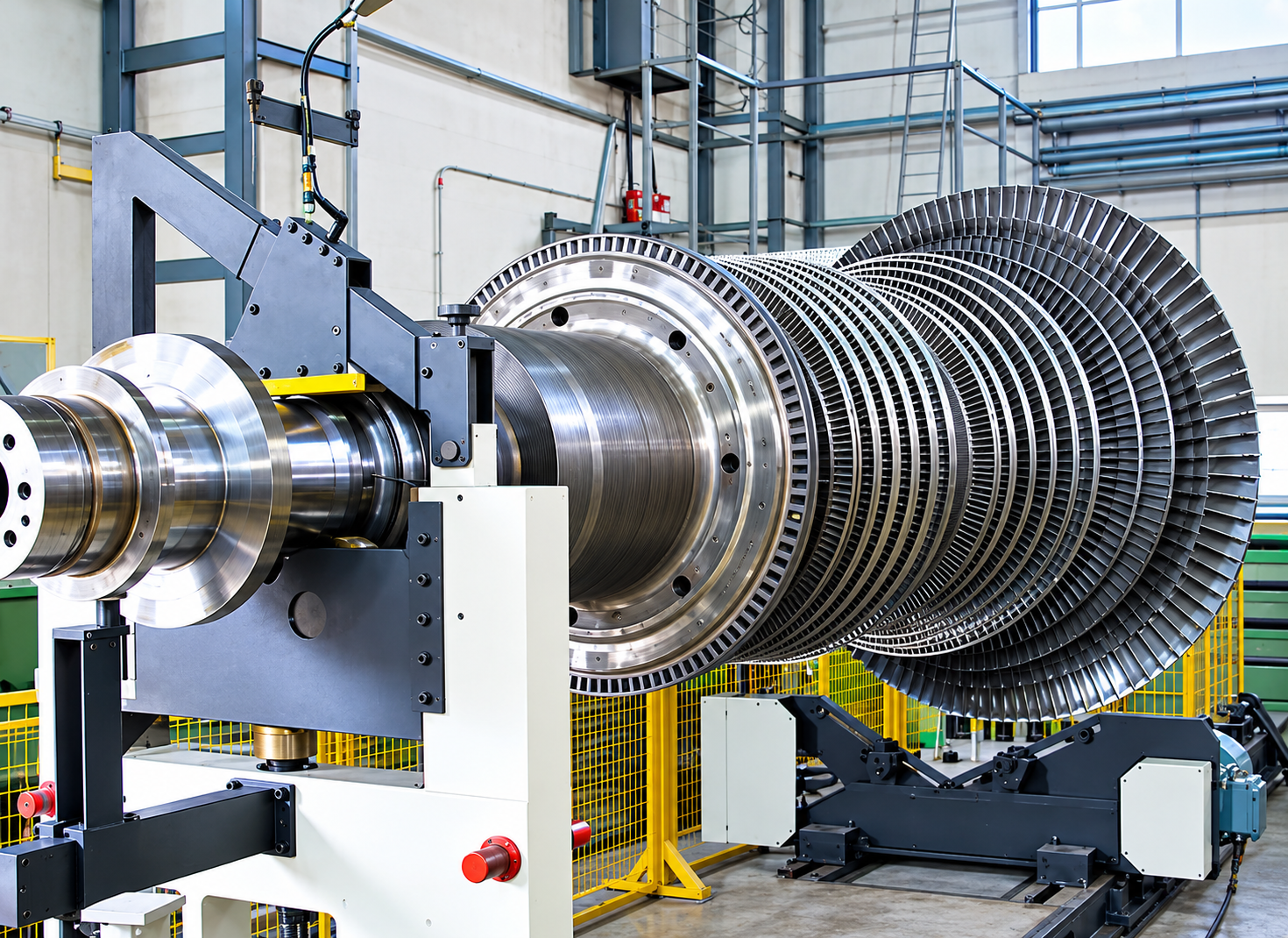
Generator rotors operate under demanding mechanical, thermal, and electrical conditions. Over time, vibration, insulation deterioration, winding damage, and bearing-related issues can affect rotor performance and the reliability of the generating unit. Identifying these problems early helps maintenance teams plan repairs, reduce unexpected shutdowns, and protect expensive equipment. Power generator rotor repair involves inspecting damaged components, identifying the cause of failure, restoring the rotor to acceptable operating condition, and verifying its performance before returning it to service.
How a Generator Rotor Affects Power Generation
A generator rotor is the rotating assembly that produces a magnetic field inside the machine. In a synchronous generator, this magnetic field interacts with the stator windings to generate electrical power. Depending on the machine design, the rotor may use field windings supplied with direct current or permanent magnets.
Large power station generators often operate continuously under significant mechanical and thermal loads. Their rotors must maintain precise dimensions, withstand centrifugal forces, and remain electrically insulated. Even a relatively small defect can affect vibration levels, cooling efficiency, or electrical output.
Rotor construction varies by application. Salient-pole rotors are common in many hydroelectric generators, while cylindrical rotors are widely used in high-speed steam turbine-driven generators. These differences influence inspection methods, repair procedures, and balancing requirements.
Common Rotor Problems That Require Attention
Rotor damage can develop gradually or occur following an abnormal operating event. Maintenance engineers generally investigate several categories of faults.
Winding and insulation deterioration: Thermal ageing, contamination, electrical stress, and repeated heating and cooling cycles can weaken insulation. Damaged field windings may develop shorted turns, ground faults, or electrical discontinuities.
Mechanical distortion: Excessive temperatures, overspeed events, or uneven operating stresses can cause dimensional changes. Engineers may need to assess shaft geometry, runout, and the condition of critical surfaces.
Cracks and surface damage: Fatigue, stress concentration, corrosion, and previous repair work can contribute to cracking. Non-destructive testing helps identify defects that may not be visible during a routine visual examination.
Excessive vibration: Rotor imbalance, misalignment, bearing problems, looseness, and electromagnetic forces can produce abnormal vibration. Measurements taken during operation can help engineers narrow down the source.
Cooling problems: Blocked ventilation passages or restricted cooling flow can create local hot spots. These conditions may accelerate insulation deterioration and increase the likelihood of further damage.
Accurate diagnosis is essential because the visible symptom does not always identify the underlying fault.
Inspection and Testing Before Repair
A reliable repair programme begins with a documented assessment of the rotor’s condition. Engineers review operating history, previous maintenance records, vibration trends, temperature readings, and any recent protection trips or abnormal events.
The inspection may include visual examination, dimensional measurements, checks for shaft runout, and non-destructive testing selected for the material and suspected defect. Magnetic-particle testing can help detect surface and near-surface discontinuities in suitable ferromagnetic materials. Ultrasonic testing may be used to investigate internal flaws where the component geometry and material permit.
Electrical testing depends on the rotor design. For wound-field machines, appropriate checks may include insulation resistance, winding resistance, and tests for inter-turn faults. Test procedures and acceptance criteria should follow the manufacturer’s instructions and applicable engineering standards.
Inspection findings help determine whether the rotor needs cleaning, localized repair, winding refurbishment, machining, component replacement, or a more extensive restoration programme.
Repair Methods Used for Different Rotor Faults
The correct repair method depends on the defect’s location, severity, material, and effect on the machine’s structural and electrical integrity.
For winding-related faults, specialists may repair connections, replace damaged insulation, or rewind the rotor when necessary. Rewinding requires careful control of conductor placement, insulation systems, electrical connections, and thermal performance.
Mechanical repairs may involve restoring damaged surfaces, correcting permissible dimensional deviations, or replacing worn components. Welding, metal deposition, and machining should only be performed after engineering assessment because excessive heat or material removal can affect shaft strength and fatigue resistance.
Rotor balancing is another important stage. Material loss, component replacement, or winding work can alter the rotor’s mass distribution. Balancing reduces unwanted centrifugal forces and helps limit vibration during operation. The required balancing procedure depends on rotor design, operating speed, and manufacturer specifications.
Selecting a Power Generator Rotor Repair Service
Choosing a specialist requires more than comparing quotations. A suitable power generator rotor repair service should have experience with the relevant generator type, access to appropriate testing facilities, and documented procedures for handling large rotating assemblies.
Ask prospective providers about their experience with comparable rotor designs, inspection capabilities, repair documentation, quality-control processes, and final testing arrangements. Confirm whether the work will be completed in a suitably equipped workshop or partly at the power station.
A detailed technical proposal should identify the reported fault, planned inspections, recommended repairs, replacement components, quality checks, and expected scope of work. It should also explain any uncertainties that could affect the final cost or repair schedule.
An experienced rotor repair company should be able to explain why a particular repair is appropriate, which defects require further investigation, and what evidence will demonstrate that the completed work meets the required acceptance criteria.
Special Considerations for Steam and Turbine Rotors
Steam turbine-driven generators present particular challenges because their rotors operate at high rotational speeds and experience substantial thermal and mechanical stresses. Thermal cycling, vibration, erosion, corrosion, and stress-related damage may affect different parts of the assembly.
Steam turbine rotor repair may involve shaft inspection, blade and attachment assessments, journal restoration, crack evaluation, or specialist machining. The appropriate scope depends on the turbine stage, rotor material, operating history, and defect location.
For broader turbine rotor repair work, engineers must also consider rotor dynamics, alignment, clearances, material properties, and the effect of any repair on fatigue life. Repairs to highly stressed areas require careful engineering review rather than relying on visual appearance alone.
Turbine rotors and generator rotors serve different functions, so their inspection criteria and repair procedures should not be treated as interchangeable. Equipment-specific drawings, technical specifications, and manufacturer recommendations should guide the work.
Testing and Quality Checks After Repair
A repaired rotor should undergo verification appropriate to the work performed. Depending on the scope, this may include dimensional inspection, non-destructive testing of repaired areas, electrical checks, winding inspections, and balancing.
Before installation, engineers should confirm that repaired dimensions, fits, and clearances meet the relevant specifications. Documentation should record the original findings, repair procedures, materials used, test results, and any limitations identified during the work.
After reassembly, commissioning procedures may include alignment checks, bearing inspections, vibration monitoring, and controlled operational testing. Readings should be compared against suitable baseline data and equipment-specific limits.
Clear documentation also gives maintenance teams a reference for future inspections and helps them identify recurring problems before those faults cause another forced outage.
Preventive Maintenance to Extend Rotor Service Life
Preventive maintenance reduces the risk of avoidable rotor damage. Operators should monitor vibration, bearing temperatures, electrical performance, and other operating parameters recommended by the equipment manufacturer.
Periodic inspections can identify insulation deterioration, contamination, loose connections, and early signs of mechanical damage. Maintaining suitable cooling conditions and following approved start-up and shutdown procedures also helps limit thermal and mechanical stress.
Maintenance intervals should reflect operating hours, start-stop frequency, equipment age, operating conditions, and previous inspection findings. A documented condition-monitoring programme allows maintenance teams to plan interventions based on evidence rather than waiting for a breakdown.
Conclusion
Generator rotor reliability depends on accurate fault diagnosis, technically appropriate repairs, and careful verification before equipment returns to operation. Understanding common rotor defects helps plant operators evaluate repair recommendations and plan maintenance more effectively. Working with qualified specialists and maintaining detailed inspection records can reduce the risk of recurring failures, support dependable power generation, and help protect long-term equipment performance.


 By