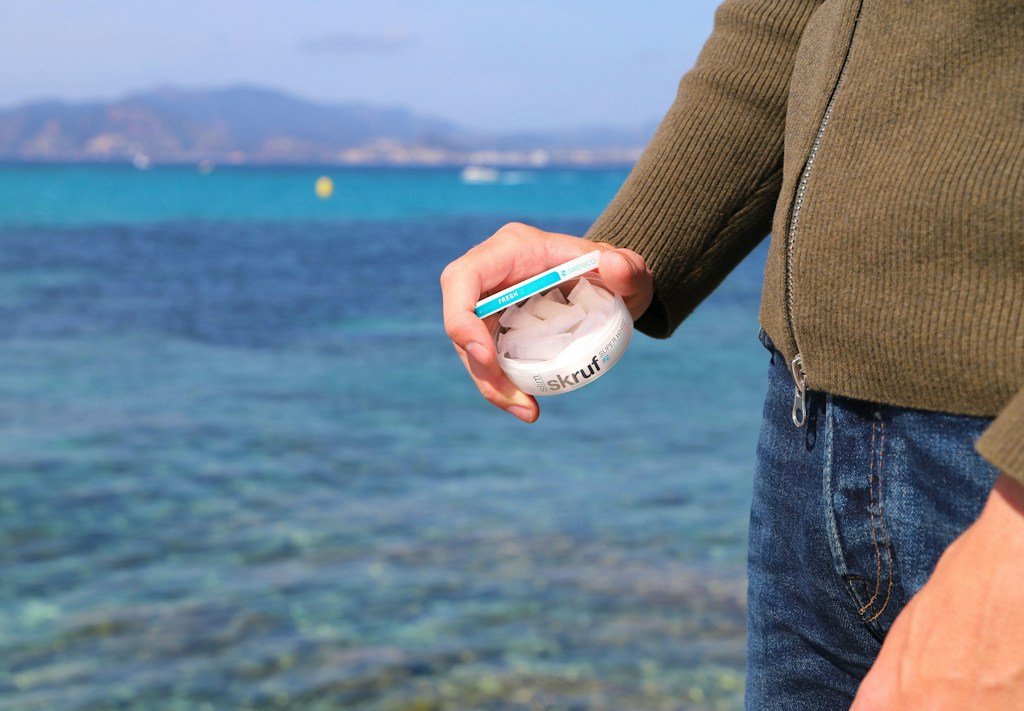
Nicotine pouches, nicotine-free ritual pouches and functional pouches with caffeine are separate product families. Here is how to tell them apart.
Quick answer: Nicotine free pouches are not one product. Ritual pouches hold flavor and fiber at 0 mg nicotine. Functional pouches add caffeine, usually 50 mg, or nootropics. Nicotine pouches are the third family and deliver nicotine at 3 mg or 6 mg in the 20 ZYN products the FDA authorized in January 2025. None is risk-free.
Key facts
- 20 ZYN nicotine pouch products, each in 3 mg and 6 mg strengths, received FDA marketing authorization in January 2025.
- A nicotine free pouch contains 0 mg nicotine and 0 mg tobacco, though a “tobacco-free” label alone does not guarantee either.
- A functional pouch commonly carries 50 mg caffeine. The Nectr Focus+ formula adds 100 mg L-theanine, 85 mg Alpha-GPC, 85 mg L-tyrosine and 30 mcg huperzine A.
- The FDA cites 400 mg of caffeine per day as an amount not generally associated with adverse effects in healthy adults.
- Nicotine-free pouches have no single US product category, so some are sold as dietary supplements and some as food.
What is the difference between nicotine pouches and nicotine free pouches?
The difference is what the pouch delivers and who regulates it. All three families are small sachets tucked between the upper lip and gum, and on a shelf they look nearly identical. The split is chemical and legal, not visual.
Nicotine pouches. These contain nicotine, plant fiber and flavorings, and in the US they are regulated as tobacco products. The 20 ZYN products the FDA authorized in January 2025 come in 3 mg and 6 mg strengths, are marketed to adults 21 and older, and are not risk-free.
Nicotine free pouches used for ritual or flavor. This group carries no nicotine and no stimulant, just fiber, flavoring and often a sweetener. It is the group most often sold as tobacco-free alternatives to snus and nicotine pouches, and its job is the physical sensation: pressure on the gum, flavor release, a small pause in the day. Nectr’s Zero line is one example, at 0 mg caffeine, 0 mg nicotine and 0 mg tobacco.
Functional pouches. These add an active ingredient, usually caffeine and sometimes nootropics, still with no nicotine. Brands also call them energy pouches or nootropic pouches. The dose is the product, so the label carries more weight here than in either other group.
Table 1: the three pouch families compared.
| Product family | What it contains | Nicotine | US regulatory status | What the buyer is choosing |
| Nicotine pouches (ZYN and similar) | Plant fiber, flavorings, nicotine | 3 mg or 6 mg in the 20 authorized ZYN products | Tobacco product, regulated by the FDA | A nicotine dose |
| Nicotine free pouches (ritual and flavor) | Plant fiber, flavorings, sweeteners, no active ingredient | 0 mg | No single category, sold as a supplement or a food depending on the seller | Mouthfeel, flavor and the pause |
| Functional pouches | Caffeine, nootropics, or both, plus flavorings | 0 mg | No single category, sold as a supplement or a food depending on the seller | A measured dose of caffeine or a nootropic blend |
Two cans on the same shelf can sit in completely different legal categories. One has been through a premarket tobacco review. The other may have had no review of its finished formula at all.
What does nicotine actually do?
Nicotine binds to nicotinic acetylcholine receptors in the brain and body, and that binding triggers dopamine release in the reward pathway. The dopamine signal is what teaches the brain to repeat the behavior. Repeated use produces dependence: tolerance to the same dose, withdrawal when it stops, and a strong pull to use again.
The public health picture is not ambiguous. The CDC calls nicotine highly addictive, notes that it is toxic to a developing fetus, and states that it can harm brain development, which continues until about age 25. The FDA was explicit that authorizing 20 ZYN products did not make them safe and did not make them FDA approved.
One labeling trap matters for anyone comparing products. A pouch can be labeled tobacco-free and still contain nicotine, because some manufacturers use lab-made nicotine rather than nicotine extracted from tobacco leaf. The CDC notes there is little chemical difference between the two. Tobacco-free is not the same claim as nicotine-free, and marketing uses them interchangeably.
What do functional pouches put in the pouch?
A functional pouch usually carries caffeine, and the more elaborate formulas add amino acids, a choline source and vitamins. A typical build is 50 mg caffeine, 100 mg L-theanine, 85 mg Alpha-GPC, 85 mg L-tyrosine, huperzine A in micrograms, and B6 and B12. Doses vary by brand, which is why the label has to be read.
The evidence sits at the ingredient level, and it is uneven:
- Caffeine. Well studied for alertness, and faster into plasma through the mouth than the same dose swallowed in a capsule, which is the pharmacokinetic basis for the format.
- L-theanine. 100 mg with a low caffeine dose improved attention switching and reduced fatigue compared with placebo in controlled studies.
- L-tyrosine. A review found benefit mainly in short-term stressful or cognitively demanding situations, not a general boost at baseline.
- Alpha-GPC. A choline donor with a plausible mechanism and small, limited trials. Evidence for cognition in healthy adults is thin.
- Huperzine A. An acetylcholinesterase inhibitor with trial evidence in Alzheimer’s disease, not in healthy cognition.
- B vitamins. Included at small doses, with no cognitive claim that holds in people who are not deficient.
Ingredient evidence is not product evidence. The finished pouch has not been clinically tested, so any effect on focus is an inference from the ingredients, not a measured outcome. That gap matters more than any single study, because a formula can combine ingredients that work separately in ways nobody has tested together.
Why does the oral ritual outlast the nicotine?
Nicotine dependence and the pouch habit are two different problems that happen to share one object. The chemical side is the receptor and dopamine loop. The behavioral side is a conditioned routine: the can in the pocket, the pinch, the placement, the flavor, the pause before a task. Repetition pairs the ritual with a reward until the ritual itself becomes the cue.
That is why stopping can feel harder than the pharmacology predicts. The drug clears, but the cue remains, and it arrives at the same moments every day: after a meal, in the car, before a meeting. Someone who removes the pouch entirely loses the drug and the familiar physical sequence at once, and the second loss is what tends to break a quit attempt in the first week.
Much of the practical case rests on a narrow claim: a pouch can keep the sensory cue while the drug leaves the routine. The mouthfeel stays, the flavor stays, the pause stays, and the nicotine does not.
That is not a cessation treatment, though. A pouch does not replace a quit plan or a clinician, and the evidence for quitting is built on counseling and approved medications. Separating the ritual from the drug is the whole point of nicotine free pouches, and it is a habit tool, not a medical one.
How are nicotine pouches and nicotine-free products regulated?
Nicotine pouches are tobacco products, and that single classification drives everything else. A manufacturer files a premarket tobacco product application, and the FDA reviews it against a public health standard. The January 2025 decision covered 20 specific products at 3 mg and 6 mg, applied only to those products, permitted marketing to adults 21 and older, and did not allow reduced-risk claims. The CDC adds a detail many shoppers miss: the FDA has not approved any nicotine pouch as a smoking cessation aid.
Nicotine-free products have no equivalent pathway because they have no single category. Some are sold as dietary supplements, some as food, and labeling rules follow whichever category the seller chose. The finished pouch may reach a shelf without a premarket review, so the label is the enforcement hook.
Regulation is not a quality signal you can read off an advertisement.
What should you check on a pouch label?
Read five things: exact milligrams, full ingredient list, nicotine declaration, manufacturing statement and expiry date. If a product cannot answer all five clearly, the missing answer is the information you need.
Table 2: label checklist for any pouch.
| Check | What a clear label shows | Red flag |
| Exact milligrams per pouch | A number for every active, for example 50 mg caffeine or 30 mcg huperzine A | A “proprietary blend” with no per-pouch numbers |
| Full ingredient list | Every ingredient, including flavorings and sweeteners | A list that names the actives and stops there |
| Nicotine declaration | “0 mg nicotine” or an explicit nicotine strength in milligrams | No nicotine statement anywhere on the can |
| Manufacturing statement | GMP-certified facility, country of manufacture, lot code | No manufacturer name, no address, no lot code |
| Expiry and storage | A printed date and storage guidance | No date, or a date that has worn off the base |
The expiry line matters because flavor and actives degrade, and a pouch kept in a hot car is not the product the label describes. GMP certification is a verifiable process claim. “Lab tested” with no certificate is not.
Who should be careful with functional pouches?
Functional pouches are an adult product, and the cautions follow the actives, not the format. The FDA cites 400 mg of caffeine per day as an amount not generally associated with adverse effects in healthy adults, and pregnancy guidance is lower, around 200 mg. Caffeine taken within about six hours of bedtime measurably disrupts sleep, so an afternoon pouch is a sleep decision.
Skip them, or ask a clinician first, if you are pregnant or breastfeeding, under 18, managing a heart rhythm condition, uncontrolled blood pressure or severe anxiety, or taking medication that interacts with stimulants. Nicotine products add an age floor of 21. Gum irritation is the usual complaint, so anyone with gum disease or recent dental work should ask a dentist first.
Caregivers should treat pouches like any nicotine or stimulant product: out of reach, out of sight, never in a bag a child can open. A pouch looks like candy. None of this is a safety clearance. Nicotine-free and tobacco-free describe what is absent, not what is guaranteed.
The bottom line
Three families, one shelf. Nicotine pouches deliver nicotine and are regulated as tobacco products. Nicotine-free pouches deliver the ritual at 0 mg nicotine. Functional pouches add a caffeine or nootropic dose, also with no nicotine, and they are where label precision matters most.
The choice follows from what you want to remove. If the goal is no nicotine, only the second and third families qualify, and the label is your main protection because neither has a US category reviewing it. If the goal is stopping nicotine, a pouch can carry the ritual, but the quit plan is separate.
FAQ
Are nicotine-free pouches safe?
No pouch is risk-free. Nicotine-free describes what is absent, not what is guaranteed. Nicotine exposure is zero, but gum irritation, stimulant dose and label inaccuracy remain real issues. They are not appropriate for children, pregnancy or people with certain heart conditions.
Do nicotine-free pouches show up on a drug test?
A pouch with 0 mg nicotine should not produce a positive result on a nicotine test, because there is no nicotine to detect. Testing is not uniform across labs, and a product labeled tobacco-free can still contain nicotine. Read the label and ask what is screened.
Are non nicotine pouches better than nicotine pouches?
Better at what is the honest question. Non nicotine pouches remove the addictive drug, but they are not a cessation medicine and not risk-free. If the goal is zero nicotine, only that group qualifies. If the goal is quitting, neither is a treatment on its own.
What is the healthiest form of nicotine pouch?
No agreed health ranking exists, and the FDA stated that authorizing 20 ZYN products did not make them safe. Risk depends on nicotine dose, duration of use and individual health. A nicotine-free pouch removes the nicotine, but that is a substitution choice, not a health claim.
Do energy pouches contain nicotine?
Usually not, but do not assume. Energy pouches are built around caffeine, and most are nicotine-free and tobacco-free. Some combine caffeine with nicotine, and some nicotine pouches use energy language. If the can does not state 0 mg nicotine, treat it as a nicotine product.
Can nicotine free pouches help you stop using nicotine?
They can replace the ritual, not the treatment. A pouch with 0 mg nicotine keeps the mouthfeel while removing the drug, which can make the behavioral side easier to work on. That is not a proven quit method. Counseling and approved medications are the evidence-based route.


 By

 By